
Why my denim jacket gets a second cuff photo
 Secondhand clothing seller on Mercari
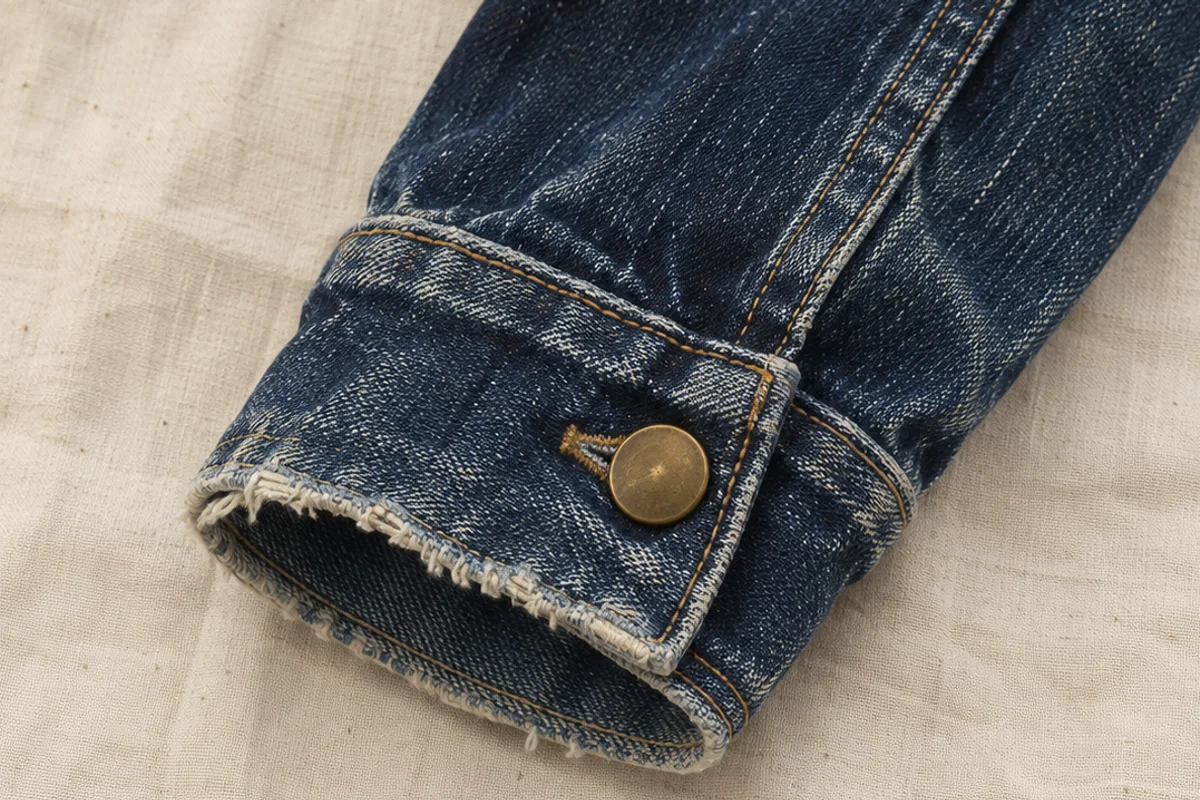
The old size tag is almost unreadable. A hanger shot tells a buyer the style, but it leaves them guessing about both fit and wear.
I button the jacket before I measure
On a hanger the shoulders have a nice shape, but the side seams curve away from the camera. I button the jacket, smooth it on a flat surface without stretching the denim and take a full front view. I measure across the chest on the garment itself and write down where my tape started and ended. Perspective in a photograph is a poor substitute for those measurements.
The paler cuff has its own picture
One sleeve has a lighter edge where the denim has rubbed. In the full view it could pass for a patch of window light. I photograph that cuff with the button in view, then photograph the other sleeve under the same light. I describe the difference in the listing, without guessing the jacket's age from the amount of wear.
I keep the texture when I prepare the copies
I use RemoveDog on my listing copies and compare the worn edge in the preview against the original. The pale threads should be visible where they cross the dark fabric. I keep the larger originals with my measurement notes so a later question about the cuff doesn't send me back to an already packed parcel.
My final check is a buyer's comparison
I open the draft and try to compare it with a jacket I own: full front first, where I measured second, and then the cuffs. I make sure the written measurement names the same points as the photograph. Someone deciding between two used jackets can now compare the garments rather than trying to decode the faded tag.