
The frame I use to explain a hidden zipper
 Sewing blogger on TikTok
A finished skirt makes a nice cover. It doesn't tell another sewer which side of the seam was under the presser foot.
I take the missing picture before I sew on
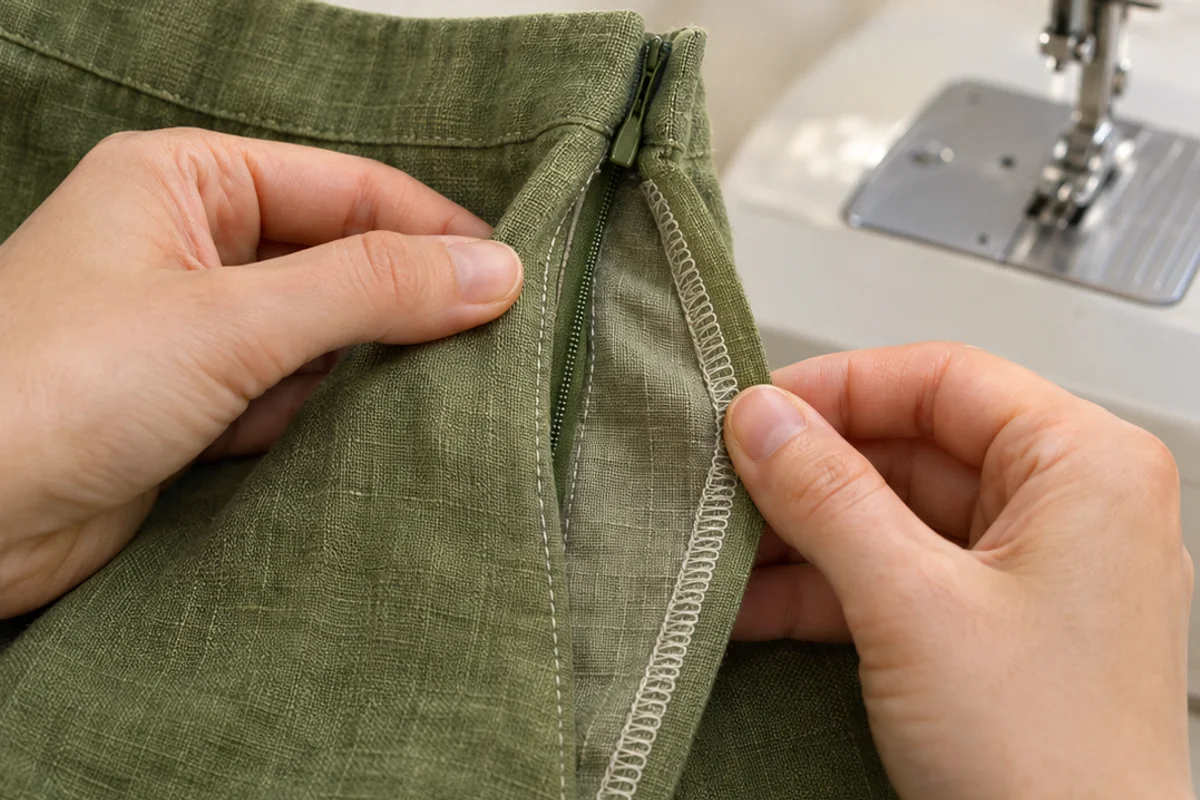
Once the seam is closed, the part people ask about is hidden. I pause with the fabric on the bench and fold the allowance back to show the teeth beside the stitch line. I take the picture now, while the thread and the fold are both visible. Unpicking the finished skirt just to recreate that view would risk a different-looking seam.
Right side, wrong side, same direction
I orient the waistband toward the top in every step. One close-up is sharper, but I had turned the skirt around to take it: swiping from the previous image makes the zipper seem to switch sides. I choose the slightly wider frame that keeps the direction clear. The finished seam goes first, then the inside view explains how I got there.
I review the photo post at thumb size
I export still images for this post and clean copies in RemoveDog. My reference is the line of green stitching next to the zipper teeth. If the two merge in the small preview, I crop the source a little closer and check it again. I keep my teaching originals separate so I can still use the wider view in a pattern note.
I stop where the picture stops teaching
My last slide shows the closed seam hanging straight. In the caption I say which side of the fabric faces the viewer in the inside shot. I leave out a second finished-skirt portrait; it adds another swipe without answering another sewing question. The post now goes from result to construction and back to the result.