
I keep the fork in the trail and leave out my starting point
 Hiking blogger on Xiaohongshu
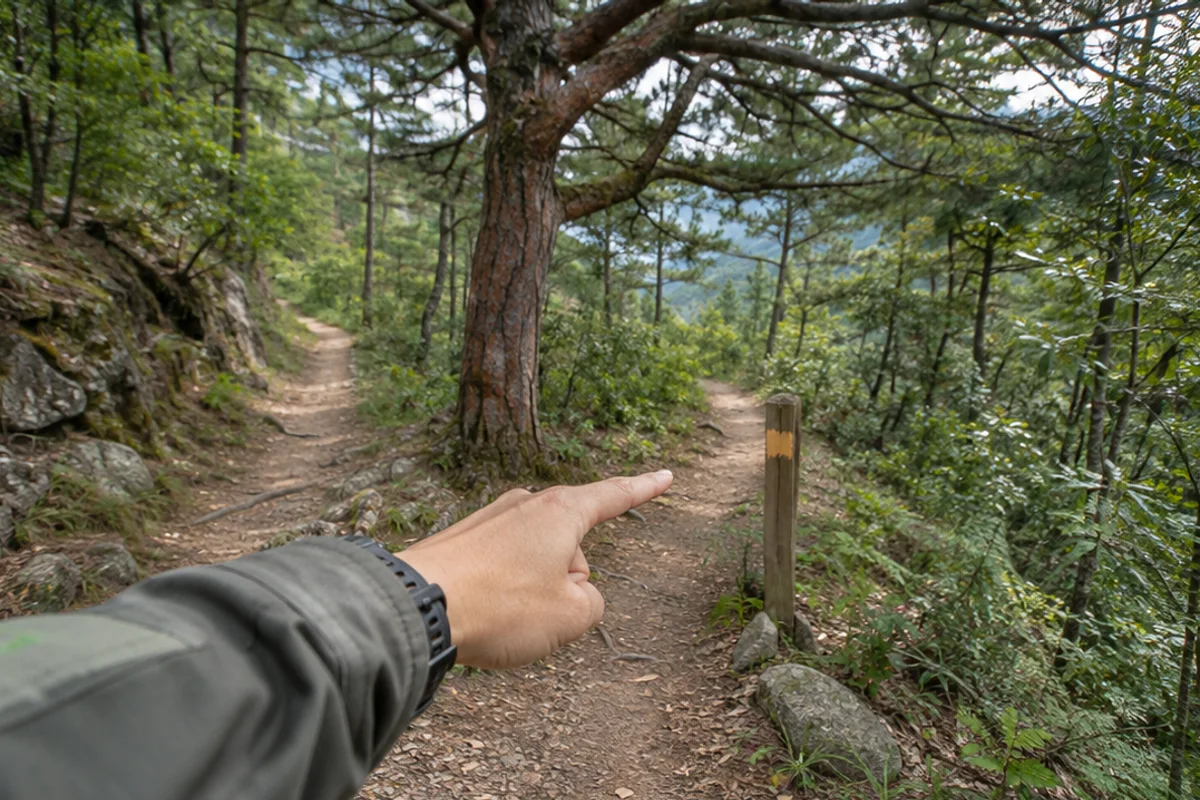
My readers needed a picture of the turn by the pine. The position recorded by my phone when I left home was a different matter.
The viewpoint wasn't the useful photo
The panorama from the ridge was the one I wanted to lead with. On the way down I realized I couldn't remember which branch I had taken at the pine. I went back to the public path junction and photographed it facing the same direction as an arriving walker. In the frame you can see both branches before the paint mark enters the story.
I give the marker some surroundings
A close-up of ochre paint is almost useless on its own. I step back enough to include the trunk, the post and the right-hand branch, then use a second image for the mark itself. I include the public trailhead name in the caption. I avoid directions based on a house or a parked car that could be private or gone the following week.
I check the file and the scene separately
I process a posting copy in RemoveDog to clear source metadata, then inspect the result for the original location information. I still examine the actual photograph for a house number or a map pin captured on a screen: those are visible pixels. If a frame shows my private starting point, I simply leave it out of the post.
The caption belongs to this particular walk
I describe the direction I was facing and say when I took the picture, rather than implying a paint mark will always be there. I finish with the wider landscape. That sequence gives the reader something useful to recognize while keeping my personal route to the public trail out of the story.